ReptiGuide is reader-supported. When you buy through links on this page we may earn a commission, at no extra cost to you. Learn more.
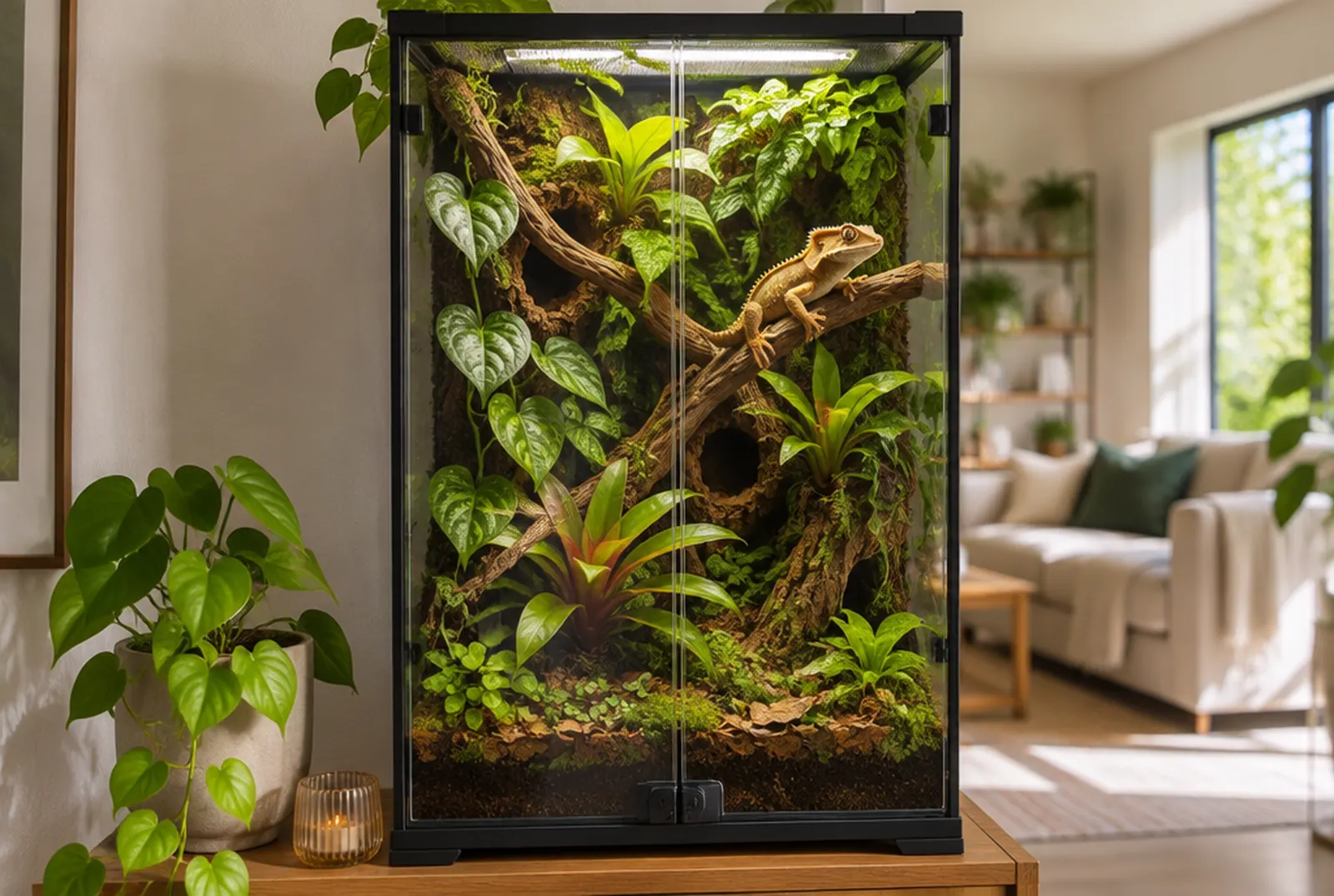
The golden rule: have the enclosure running at the right temperatures for at least 3–7 days before your reptile arrives. It gives you time to fix problems without an animal in the middle of them.
1. The enclosure
Buy the adult-sized enclosure first if you can. It's cheaper than buying two, and most species can start in it with enough cover.
| Species | Adult minimum |
|---|---|
| Crested gecko | 18×18×24 in (vertical) |
| Leopard gecko | 36×18×18 in |
| Bearded dragon | 4×2×2 ft |
| Ball python | 4×2×2 ft |
| Corn snake | 4×2×2 ft |
Check your enclosure with our enclosure size checker.
2. Heating — and a thermostat
Every heat source needs a thermostat. It's the single most important piece of safety equipment you'll buy.
- Basking/heat source: halogen flood bulb, deep heat projector or radiant heat panel (or nothing, for crested geckos in a normal home).
- Thermostat: dimming type for bulbs, on/off or pulse-proportional for mats and deep heat projectors. See our thermostat guide.
Herpstat thermostat
Proportional control with alarms and multiple outlets; the long-time keeper favourite.
3. UVB lighting
- High-UVB species (bearded dragon): T5 high-output 10–14% tube. Details in the bearded dragon UVB guide.
- Low-UVB species (crested gecko, leopard gecko, snakes): low-output T5 tube, often labelled 5–7% or "ShadeDweller"-type, with plenty of shade.
- A plug-in timer to run lights 12 hours on, 12 off.
Arcadia ProT5 UVB Kit
Complete T5 fixture and tube; choose the strength that matches your species.
4. Thermometers and a hygrometer
Stick-on dial thermometers are inaccurate. Use:
- A digital probe thermometer (one probe warm side, one cool side).
- An infrared temperature gun to check basking surface temperature.
- A digital hygrometer for humidity.
Etekcity Lasergrip Infrared Thermometer
Point-and-read surface temperatures for basking spots.
5. Furnishing
- At least two hides (warm and cool), plus a humid hide for geckos.
- Branches, cork bark and plants for cover and climbing.
- A basking platform (flat rock or slate) for dragons and leopard geckos.
- A water bowl sized for the species.
6. Substrate
| Species | Good options |
|---|---|
| Crested gecko | Soil/coco coir mix, bioactive mix, paper towel for babies |
| Leopard gecko | Soil/sand mix, slate tile, paper towel |
| Bearded dragon | Soil/sand mix, tile |
| Ball python | Coconut husk, cypress mulch, soil mix |
| Corn snake | Aspen, coconut husk, soil mix |
Thinking about bioactive? A bioactive enclosure uses a drainage layer, a soil mix, live plants and a "clean-up crew" of springtails and isopods that break down waste. It's great for crested geckos and works for many other species, but set it up and let the plants establish for a few weeks before adding the animal.
7. Food and supplements
- Insect eaters: a staple feeder insect (dubia roaches, crickets or black soldier fly larvae), a gut-load food, and a feeder container.
- Crested geckos: a complete powdered diet plus a ledge feeder cup.
- Snakes: frozen-thawed rodents of the right size, and feeding tongs.
- Supplements: plain calcium, and a calcium + vitamin/D3 product for occasional use.
8. Before your reptile arrives
- Assemble the enclosure and fit the lighting and heating.
- Plug heat into the thermostat and set the timer.
- Run it for 3–7 days and log temperatures morning and evening.
- Adjust until the basking spot, cool side and humidity are in range.
- Find a reptile vet near you before you need one.
Then read the care sheet for your species: crested gecko, leopard gecko, bearded dragon, ball python, or corn snake.