ReptiGuide is reader-supported. When you buy through links on this page we may earn a commission, at no extra cost to you. Learn more.
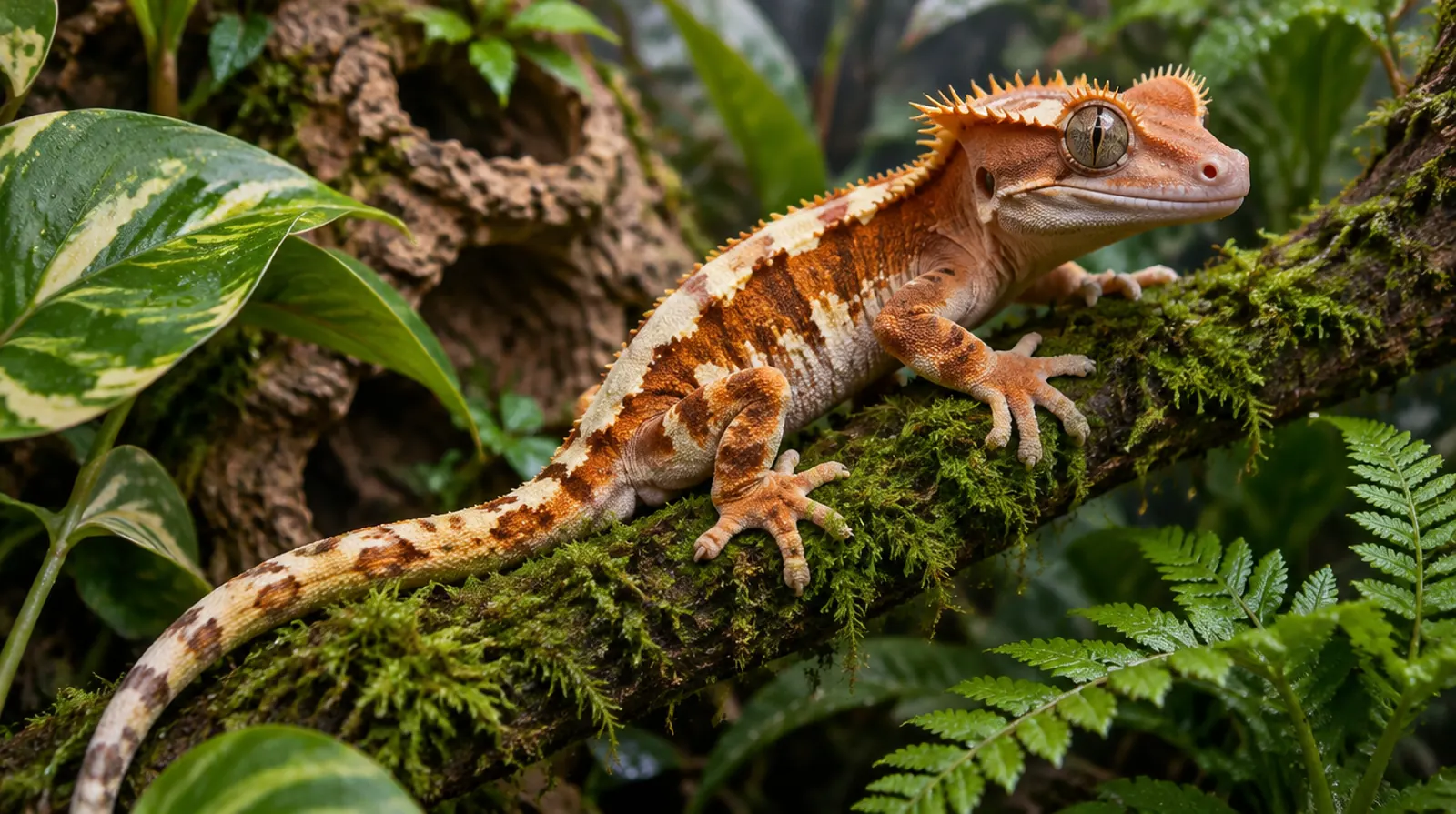
Is a crested gecko right for you?
Crested geckos (Correlophus ciliatus) come from New Caledonia, a group of islands in the South Pacific. They're nocturnal, arboreal, quiet and mostly tolerant of gentle handling, and they eat a powdered complete diet, so you don't have to keep live insects in the house if you'd rather not. That makes them one of the best first lizards.
The trade-offs: they're most active at night, they can drop their tail when stressed (and unlike many geckos, it never grows back), and they live 15–20 years. Plan for the long haul.
Enclosure
Crested geckos climb, so choose height over floor space.
| Age | Minimum | Better |
|---|---|---|
| Hatchling / juvenile | 12×12×18 in tub or terrarium | — |
| Adult (one gecko) | 18×18×24 in | 18×18×36 in or 24×18×36 in |
Front-opening glass or PVC enclosures are easiest to work with, because reaching in from above makes geckos feel like they're being grabbed by a predator. Fill the space: crested geckos feel safest with dense cover, so add branches, cork bark, vines and plenty of live or artificial plants at every height.
Keep one gecko per enclosure. Males fight, and even females housed together can compete for food and cover.
Exo Terra Glass Terrarium 18x18x24
Front-opening doors, screen top for ventilation, easy to find in stock.
Not sure your tank is big enough? Run it through our enclosure size checker.
Temperature and heating
This is where most crested gecko problems start: they handle cool far better than heat.
- Aim for 72–78°F (22–26°C) during the day.
- Nights can drop to 65–72°F (18–22°C).
- Above 82°F (28°C) is dangerous. Sustained heat stress can kill a crested gecko.
Most homes are already in range, so many keepers use no heat at all. If your room runs cold, a low-wattage heat source on a thermostat is fine, but never put a crested gecko enclosure in a sunny window or next to a radiator. Measure with a digital thermometer at the top and bottom of the enclosure, because heat rises.
Lighting and UVB
Crested geckos can survive without UVB if they eat a good complete diet, but low-level UVB is now widely recommended because it supports natural vitamin D3 production and normal day–night behavior. Use a low-output UVB tube (often sold as 5–7% or "ShadeDweller"-type) across part of the top, with plenty of plant cover so the gecko can choose how much exposure it gets. Run lights 12 hours on, 12 off, on a timer.
Humidity
Crested geckos need a daily humidity cycle, not constant dampness:
- Mist heavily in the evening so humidity peaks at 70–80%.
- Let it fall back to 50–60% during the day, so the enclosure dries out between mistings.
Constantly wet enclosures cause mould and respiratory and skin problems. A digital hygrometer takes the guesswork out of this. Geckos usually drink droplets after misting, but keep a shallow water dish available too.
Substrate
For adults, a moisture-holding soil mix (organic topsoil, coco coir and/or a commercial bioactive mix) is ideal and makes a bioactive setup possible. Paper towel is perfectly fine for hatchlings and for quarantine, because it makes it easy to check droppings. Avoid gravel, sand, and loose chunks small enough to swallow.
Diet
Feed a complete crested gecko diet (a powder you mix with water) as the staple. Pangea and Repashy are the best-known brands, and rotating between flavors helps keep geckos interested.
- Juveniles: fresh diet every day or every other day.
- Adults: fresh diet 3 times a week; remove leftovers after 24–48 hours.
- Insects (optional but good): gut-loaded crickets, dubia roaches or black soldier fly larvae, dusted with calcium, once or twice a week. Offer insects no larger than the space between the gecko's eyes.
Pangea Fruit Mix Complete Gecko Diet
Complete powdered diet; mix with water and serve in a ledge feeder.
Repashy Crested Gecko MRP Diet
Another long-established complete diet; rotate flavors to keep geckos eating.
Handling
Give a new gecko 1–2 weeks to settle before handling. Keep sessions short, sit on the floor or over a bed (they jump), and let the gecko walk from hand to hand rather than gripping it. Never grab the tail.
Common mistakes
- Overheating, especially with heat lamps or in summer. Above 82°F (28°C) is a real danger.
- Keeping the enclosure wet all the time instead of cycling humidity.
- Feeding fruit or baby food instead of a complete diet.
- A bare enclosure. Too little cover leads to stress and hiding all the time.
- Housing two males together.
Signs of a healthy crested gecko
A healthy crested gecko has a thick base to its tail, clear eyes, clean vent, sheds in one or a few pieces, and is active and climbing at night. Weight loss, a bent jaw or limbs, retained shed on toes, or lethargy are reasons to see a reptile vet.
FAQ
Do crested geckos need a heat lamp? Usually not. Most homes sit in the 72–78°F (22–26°C) range they prefer. Add low-wattage heat only if your room regularly drops below about 65°F (18°C), and always control it with a thermostat.
What size tank does an adult crested gecko need? An 18×18×24 inch vertical enclosure is the practical minimum; 18×18×36 inches or larger is better.
Can crested geckos live on fruit? No. Feed a complete commercial diet as the staple. Plain fruit lacks the right calcium balance.