Is a hognose snake right for you?
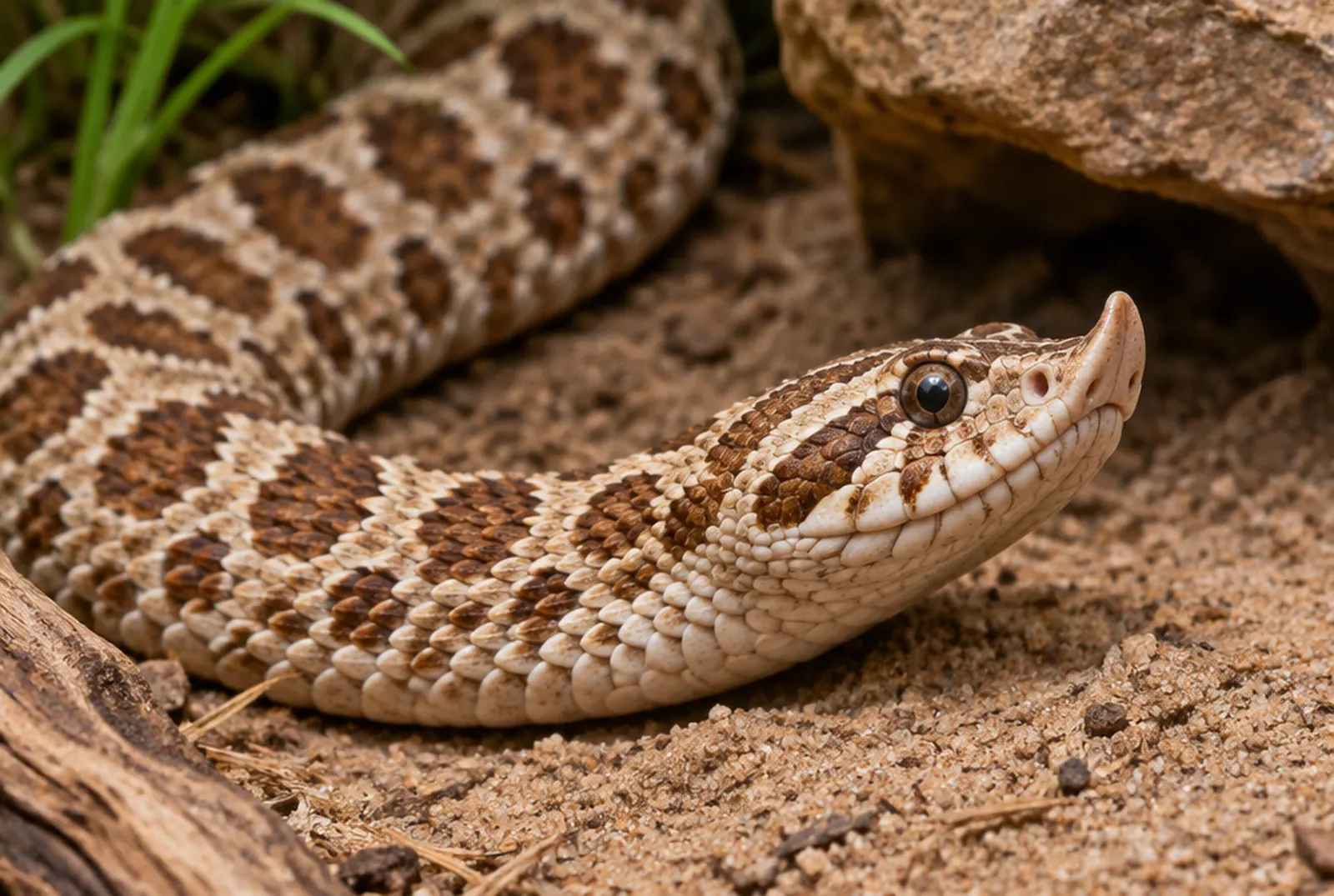
The western hognose (Heterodon nasicus) is native to the dry grasslands and sandy prairies of the central United States, southern Canada and northern Mexico. Its upturned, shovel-shaped snout is built for digging, and it spends much of its time burrowed in loose soil and sand.
Hognoses are famous for their bluff displays: when threatened, they flatten their neck, hiss loudly and fake-strike with a closed mouth. If that fails, they may roll over, open their mouth and play dead. Once settled, most are calm and easy to handle.
Note: hognoses are restricted in some US states and other jurisdictions, so check local laws.
Enclosure
| Snake | Enclosure |
|---|---|
| Hatchling | 10-gallon tank or tub |
| Adult male | 36×18×18 in minimum |
| Adult female | 4×2×2 ft recommended |
Hognoses use floor space, not height. Provide a deep layer of substrate (at least 4 inches), two or more hides, and cork bark, plants or flat stones to explore.
Heating
- Basking surface: 90–95°F (32–35°C)
- Cool side: 70–80°F (21–27°C)
- Night: room temperature in the low 70s °F is fine
A halogen flood bulb over a basking area is the best way to recreate sunshine. Under-tank heat is less effective for a burrowing species because the substrate insulates it. Use a thermostat on every heat source.
Lighting
Hognoses are diurnal, and low-level UVB plus a 12-hour light cycle are recommended for natural behavior.
Humidity and substrate
Keep humidity at 30–50%, with a humid hide or a lightly dampened corner of substrate for shedding. Good substrate options:
- Sand/soil mix (great for burrowing)
- Aspen shavings (holds tunnels well)
Remove waste promptly and fully replace loose substrate every few months. If using loose substrate, some keepers feed in a separate container or on a plate to avoid ingestion.
Feeding
Feed frozen-thawed mice. Prey should be roughly the diameter of the snake's head to its widest point.
| Snake | Prey | Frequency |
|---|---|---|
| Hatchling | Pinky mouse (or pinky parts) | Every 5–7 days |
| Juvenile | Fuzzy mouse | Every 5–7 days |
| Adult | Hopper to adult mouse | Every 7–14 days |
Picky eaters: wild hognoses eat a lot of toads and frogs, and some captive hatchlings need encouragement. Scenting a thawed mouse with toad- or frog-scent products, or with tinned fish juice, often helps. Weigh your snake monthly; occasional fasting, especially by males in winter, is normal if weight stays stable.
Handling and venom
Western hognoses have enlarged rear teeth and mildly toxic saliva. Bites are uncommon, often "feeding bites" when the snake smells food on your hands, and usually cause only local swelling and itching. Wash hands before handling, never handle right after touching prey, and let the snake release on its own if it does bite and hold on.
Common mistakes
- Shallow substrate.
- Too-cool basking spot, which leads to poor appetite.
- Panicking over normal fasting.
- Handling with food smell on your hands.
- Mistaking the death-feigning display for illness. Leave the snake alone and it will recover in minutes.
Signs of a healthy hognose
Active burrowing and exploring by day, regular feeding (allowing for seasonal slowdowns), complete sheds and steady weight. Wheezing, mucus, mouth swelling or ongoing weight loss warrant a reptile vet.
FAQ
What size enclosure does a western hognose need? 36×18×18 in for one adult minimum; 4×2×2 ft for adult females.
Are hognose snakes venomous? Rear-fanged with mildly toxic saliva; bites usually cause only minor local swelling.
Why won't my hognose eat? Usually stress, temperatures or seasonal fasting. Try scenting prey and monitor weight.